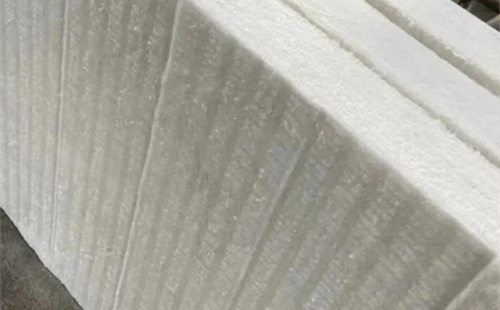
Aluminum silicate needled blanket, commonly named ceramic fiber blanket, is made of high-purity aluminum silicate fibers through professional needling reinforcement molding. With soft, flexible and rollable features, it possesses excellent high-temperature resistance, thermal insulation, fire retardancy and sound absorption performance. As an indispensable refractory and thermal insulation material for high-temperature industrial scenarios, it is widely applied in industrial kilns, thermal pipeline insulation, power boilers, metallurgical equipment, new energy thermal insulation, fire partition walls and other industrial thermal protection fields.
Different from ordinary rubber and plastic thermal insulation cotton, aluminum silicate needled blanket features fluffy disordered fiber weaving and weak bonding force between needled layers. During cutting processing, it is extremely easy to cause massive fiber shedding, blanket delamination and loose edge residue. The fine floating fiber dust will irritate the human respiratory tract, putting forward extremely high requirements for the cutting mode and dust removal structure of processing equipment. Traditional blanking equipment cannot balance finished product integrity and workshop environmental protection standards. With flexible cold cutting processing advantages, the CNC oscillating knife cutting machine has become the mainstream automatic processing equipment for aluminum silicate needled blankets.
Production Defects of Traditional Aluminum Silicate Blanket Cutting Processes
The irregular fiber interweaving structure and weak needled layer bonding make aluminum silicate blankets force-sensitive. All conventional processing methods have obvious technical shortcomings, restricting product quality and production efficiency:
1. Manual Scissor Cutting
Manual blanking requires manual stretching and flattening of the blanket. The pulling force easily loosens and delaminates the needled layers, causing massive fiber shedding and floating dust in the workshop. Manual processing has large dimensional errors for arcs and special-shaped parts, with poor batch consistency. It leads to serious waste of high-cost refractory materials, and long-term manual operation will cause respiratory damage to workers, failing to meet standardized industrial production requirements.
2. Laser Thermal Cutting
Laser cutting is a typical thermal processing technology. Local high temperature burns and destroys the bonding points of aluminum silicate fibers, making the cutting edge hard and brittle. The original flexible and bendable thermal insulation structure is damaged, and the finished products are prone to fracture and slag falling during installation and use. In addition, high-temperature burning produces pungent smoke, which violates the environmental protection standards of refractory material workshops and greatly weakens the high-temperature resistance and thermal insulation performance of ceramic fiber blankets.
3. Rotary Blade Cutting
The rotary cutter separates materials through extrusion and tearing force. The transverse tensile force generated during blade falling directly tears the needled interwoven layer, especially for thick aluminum silicate blankets, resulting in severe delamination and loose flocculent edges. A large number of floating fibers remain on the cutting surface, requiring manual edge cleaning one by one after processing. The additional manual procedures greatly reduce overall production efficiency and increase production costs.
4. Die Stamping Blanking
Die stamping cuts materials through strong mechanical pressure, which compacts the internal fluffy fiber pores of the blanket and damages the original pore structure, directly reducing the thermal insulation effect of finished products. Meanwhile, custom die manufacturing has a long cycle and high cost. It is only suitable for single-specification production and cannot flexibly switch diverse orders such as pipeline insulation arc gaskets and special-shaped equipment thermal insulation parts, resulting in low production flexibility.
To ensure complete cutting edges, minimal fiber shedding and undamaged refractory thermal insulation performance of aluminum silicate needled blankets, CNC oscillating knife cold cutting equipment is the most matching automatic blanking solution.
Core Advantages of Oscillating Knife Cutting Machine for Aluminum Silicate Needled Blanket
Aiming at the material characteristics of aluminum silicate blankets, such as easy delamination and fiber shedding, our self-developed oscillating knife cutting machine optimizes the knife head vibration frequency and buffer feeding speed, and is equipped with a professional dust removal system to support continuous stable processing of refractory needled blankets of various thicknesses.
1. Normal Temperature Cold Cutting, Complete Thermal Structure Preservation
The equipment cuts fibers through high-frequency small-amplitude blade vibration with zero high-temperature heating throughout the process. It will not damage the fiber needled interwoven layers or internal pore structure of the blanket. The original high-temperature resistance and thermal insulation performance are completely retained. The cut finished products have no brittle fracture at the edges and can be directly used for high-temperature equipment lining assembly.
2. Gentle Shearing, Effectively Suppressing Delamination and Residue
Different from the violent tearing processing of rotary cutters, oscillating knife shearing is gentle and stable without strong pulling force on the blanket fibers. It effectively avoids separation of needled reinforcement layers, delivers compact and neat cutting edges, and greatly reduces floating fibers and edge slag falling. No massive manual trimming is required, significantly improving finished product appearance and practical performance.
3. Zoned Vacuum Adsorption, Anti-Deformation & High Precision
Lightweight and fluffy aluminum silicate blankets are easy to slide and arch during processing. The machine is equipped with a partition vacuum adsorption platform, which can stably flatten and fix whole rolls and sheet materials. It completely avoids displacement, stretching and deformation during cutting. The dimensional consistency of mass-produced cut pieces is stable, and the processing accuracy of complex arcs and hollow thermal insulation parts can reach ±0.01mm.
4. Intelligent Nesting, Reduce Refractory Material Loss
Equipped with a professional intelligent nesting system, the equipment automatically optimizes the layout of cut pieces, maximizes the utilization of whole blanket materials and reduces edge waste. Matched with the automatic roll feeding mechanism, it realizes uninterrupted continuous cutting, with processing efficiency more than 3 times that of manual cutting. It perfectly adapts to large-scale batch production of thermal insulation material factories and effectively reduces raw material costs.
5. Matched Dust Removal System, Eco-Friendly Workshop Production
A supporting centralized dust collection device is configured to collect a small amount of fiber debris generated during cutting, preventing floating aluminum silicate fibers from diffusing in the workshop. It reduces respiratory stimulation to operators, meets industrial safety production and environmental inspection standards, and realizes standardized and clean workshop processing.
Exclusive Equipment Optimization for Aluminum Silicate Needled Blanket Processing
As a professional manufacturer of flexible refractory material cutting equipment, we have implemented targeted equipment upgrades for aluminum silicate blanket processing scenarios:
First, exclusive refractory material cutting programs are preset. By reducing blade impact force and optimizing vibration frequency, it fundamentally solves common processing problems such as delamination, fiber shedding and incomplete cutting.
Second, it adopts an integrated thickened welded frame structure. The fuselage runs stably without jitter during long-term high-speed continuous cutting, ensuring long-term stable processing accuracy and low equipment failure rate.
Third, the visualized intelligent operating system with a simple interface supports one-click cutting after drawing import. Ordinary workers can master independent operation after short-term training, reducing reliance on skilled workers.
Fourth, we provide one-stop landing after-sales services, including free on-site installation and commissioning, professional staff operation training, lifelong free software upgrades and rapid nationwide after-sales response, ensuring uninterrupted operation of thermal insulation material production lines.
Conclusion
The core processing difficulties of aluminum silicate needled blankets focus on preventing fiber shedding and layer delamination, protecting original refractory and thermal insulation performance, and controlling cutting dust. Traditional manual, laser, rotary blade and die cutting processes have obvious inherent defects, resulting in poor finished product quality, increased material loss and extra rework costs.
Relying on pure cold shearing technology, vacuum adsorption positioning, intelligent nesting optimization and professional dust removal system, the CNC digital cutting machine solves all major processing pain points of ceramic fiber blankets in one stop. It balances finished product quality, production efficiency and workshop environmental protection standards, making it the preferred automatic blanking equipment for refractory and thermal insulation material processing factories.
If you have processing demands for aluminum silicate needled blankets and ceramic fiber blankets, welcome to contact us for free sample testing, exclusive customized cutting solutions and equipment quotations.