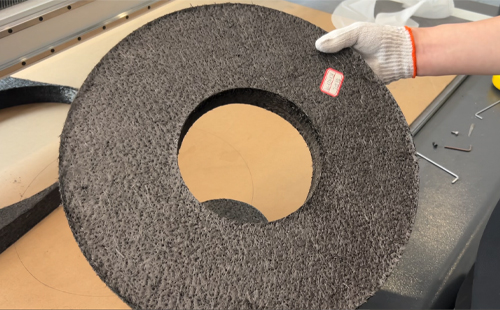
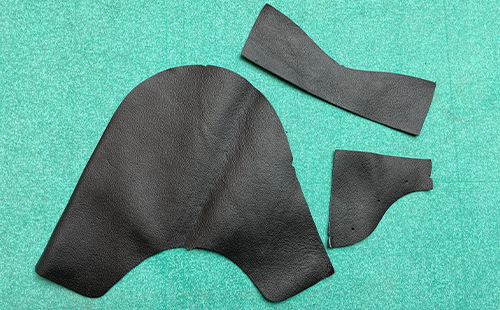
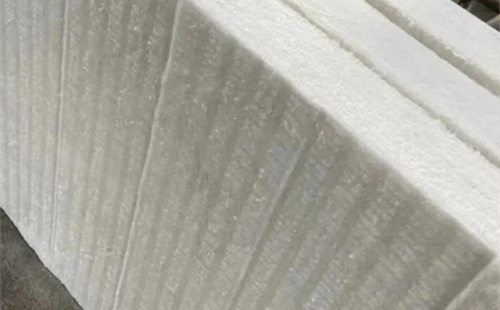
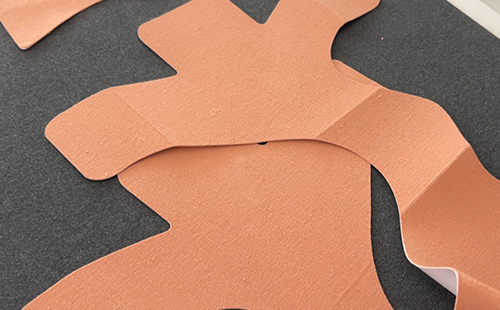
However, the loose fiber interweaving structure and weak interlayer bonding force make C/C preforms extremely difficult to process. The blanking procedure is prone to various quality defects such as floating fiber fraying, edge chipping, interlayer separation and local cracking. Even tiny internal micro-cracks will expand in the subsequent impregnation and carbonization processes, leading to overall scrap of finished high-temperature components. Considering the extremely high raw material cost of C/C composites, modern advanced material manufacturers are in urgent need of low-loss, high-yield automated blanking equipment. With exclusive flexible cold shearing processing technology, the
CNC oscillating knife cutting machine has become the preferred standard processing solution for C/C preform cutting.
Core Defects of Traditional C/C Composite Cutting Technologies
C/C preforms are multi-layer fiber stacked materials with extreme force sensitivity. All conventional processing methods fail to maintain complete preform integrity and bring hidden dangers to subsequent production and final product performance:
1. Manual Template Cutting
Traditional manual cutting relies on fixed templates and manual feeding, making it impossible to maintain uniform spreading and feeding tension. Laminated carbon felt materials are easy to slide and misalign during processing. The pulling force generated by manual cutting causes large-area fiber loosening and surface fuzzing, resulting in low dimensional accuracy for special-shaped arcs, annular gaskets and irregular structural parts. In addition, floating carbon dust produced during manual operation pollutes the workshop environment and endangers operator health. Manual layout has extremely low material utilization rate, causing serious waste of high-value C/C raw materials and cannot meet the requirements of large-scale standardized production.
2. Laser Thermal Cutting
Laser cutting is a typical thermal processing technology that generates localized high temperature on cutting paths. The intense heat triggers oxidation and ablation of carbon fibers, forming brittle notches and irreversible thermal affected zones on cutting edges. Burned and broken surface fibers leave hidden structural damage, which will continuously expand under long-term high-temperature service conditions, greatly reducing the service life and stability of thermal insulation components. Moreover, the harmful smoke and dust produced by laser processing fail to meet the environmental protection and safety production standards of high-end new material workshops.
3. Milling Cutter & Circular Saw Mechanical Cutting
Milling and circular saw cutting separate materials through strong mechanical extrusion and high-speed friction. The powerful cutting impact penetrates deep into the multi-layer interior of C/C preforms, directly inducing interlayer cracking and fiber pulling-out. The processed cutting surface is uneven and covered with residual debris, requiring a great deal of manual polishing and cleaning procedures, which greatly extends the production cycle and increases labor costs. For thick-specification C/C preforms, mechanical cutting often causes incomplete penetration and intermittent notches, resulting in high product rejection rates.
4. Die Cutting & Stamping Blanking
Die cutting and stamping adopt high-pressure impact blanking mode. The strong instantaneous pressure compresses the internal porous structure of carbon felt, permanently damaging the original pore uniformity of C/C preforms. This structural change seriously affects the resin impregnation uniformity and final mechanical properties of sintered finished products. Meanwhile, custom die development requires long lead time and high investment cost, with poor flexibility for switching diverse specifications of annular and special-shaped preform orders, failing to adapt to personalized customized production demands.
To fully preserve the original porous structure of C/C preforms and completely avoid common defects such as interlayer delamination, edge chipping and fiber fraying, CNC oscillating knife cold cutting technology is the most matching and reliable processing method for C/C preform blanking.
Unique Processing Advantages of Oscillating Knife Cutter for C/C Composites
Aiming at the loose laminated structural characteristics of C/C preforms, our oscillating knife cutting machine is professionally optimized with customized tool path algorithms, adjustable high-frequency vibration parameters and graded buffer knife-down force, supporting stable and continuous cutting of carbon felt and carbon fiber mesh preforms with different thickness specifications.
1. Normal Temperature Cold Shearing, Zero Thermal Structural Damage
The equipment adopts high-frequency reciprocating blade physical cutting, with no high-temperature heat generation throughout the whole processing process. It completely avoids fiber oxidation, thermal embrittlement and pore shrinkage caused by thermal processing. The original porous structure and fiber skeleton of C/C preforms are fully retained, without interfering with subsequent impregnation, carbonization and sintering processes. It effectively guarantees the comprehensive high-temperature resistance and structural stability of final aerospace and photovoltaic components.
2. Gentle Shearing to Eliminate Delamination and Fiber Fraying
Different from the violent tearing and impact cutting of saw blades, the oscillating knife realizes low-resistance gentle shearing. It will not produce strong pulling force on the preform fiber skeleton, effectively solving common processing problems such as interlayer delamination, edge slag falling and surface fiber peeling. The cutting edge is smooth, flat and burr-free, which greatly reduces the workload of subsequent manual trimming and polishing, improving production efficiency and product consistency.
3. Zoned Vacuum Adsorption Platform, High-Precision Anti-Displacement Cutting
C/C preforms are fluffy, soft and prone to sliding and arching during processing. The machine is equipped with a partitioned negative pressure vacuum adsorption table, which can firmly fix whole rolls and sheet preform materials. It ensures no displacement or layer misalignment during high-speed cutting, with stable processing accuracy up to ±0.01mm. It supports one-time precise forming of various complex workpieces, including annular gaskets, arc thermal insulation parts and special-shaped support components.
4. Intelligent Nesting System, Dramatically Reduce High-End Material Waste
Equipped with an independent intelligent nesting algorithm system, the equipment can automatically optimize workpiece layout and edge material utilization according to preform sizes and shapes. Compared with manual layout, the material utilization rate is significantly improved, effectively saving high-cost C/C composite raw materials. Matched with an automatic feeding system, it supports uninterrupted continuous cutting of roll materials, with high automation and processing efficiency, fully meeting the stable batch production needs of high-end new material enterprises.
5. Supporting Dust Removal System, Standard Eco-Friendly Production
The machine is equipped with a matched professional dust collection device, which can centrally collect floating carbon fiber debris and dust generated during cutting. It effectively avoids dust diffusion in the workshop, reduces occupational health risks for operators, and fully meets the safety production and environmental protection inspection standards of aerospace and semiconductor precision manufacturing workshops.
Exclusive Customized Optimization of C/C Composite Cutting Equipment
Targeting the high-precision and low-loss processing scenarios of high-end C/C composite preforms, the equipment has undergone multiple targeted professional upgrades to adapt to composite material processing characteristics:
First, a dedicated process parameter library for C/C composite materials is preset. By fine-tuning knife-down buffer amplitude and vibration frequency, it fundamentally solves industry common problems such as interlayer delamination, fiber fraying and incomplete cutting.
Second, it adopts an integrated thickened welded frame structure. The fuselage is stable without jitter during long-term high-speed continuous cutting, ensuring no attenuation of processing accuracy and realizing long-term stable batch production.
Third, it is equipped with a visualized intelligent operating system, which supports direct import of mainstream DXF and PLT design files. Novice operators can master nesting and cutting operations after simple short-term training, with low operation threshold and strong practicability.
Fourth, we provide full-cycle one-stop after-sales services, including free sample testing, on-site installation and commissioning, professional staff operation training, and lifelong free upgrade of cutting software, eliminating customers' after-sales worries.
Conclusion
The core technical difficulties of C/C preform processing focus on preventing interlayer delamination and fiber fraying, protecting the original porous structure, and controlling material loss. Traditional processing technologies including manual cutting, laser cutting, saw cutting and die cutting have obvious inherent defects, which are easy to produce hidden structural damage and greatly increase the scrap cost of high-end composite materials.
Relying on pure cold shear processing, vacuum precise positioning, intelligent nesting optimization and matched dust removal system, the CNC oscillating knife cutting machine solves all major processing pain points of C/C composite preforms in one stop. It balances processing quality, production efficiency and workshop environmental protection standards, making it the optimal automated blanking equipment for aerospace, photovoltaic and semiconductor new material enterprises.
If you have processing demands for C/C preforms, carbon felt and carbon fiber composite materials, welcome to contact us for free sample testing and customized exclusive cutting solutions and equipment quotations.