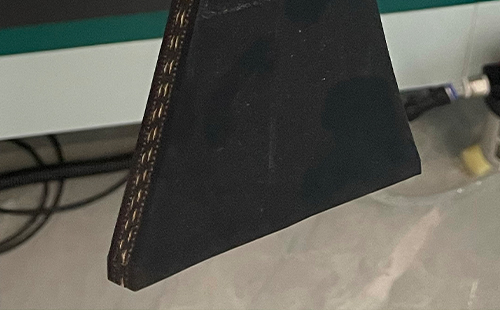
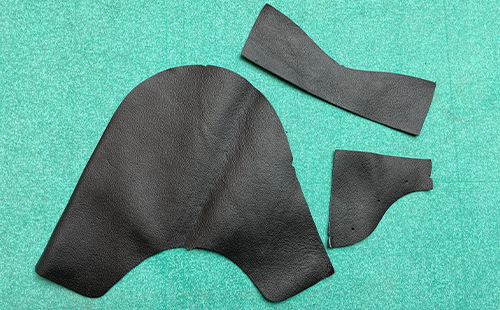
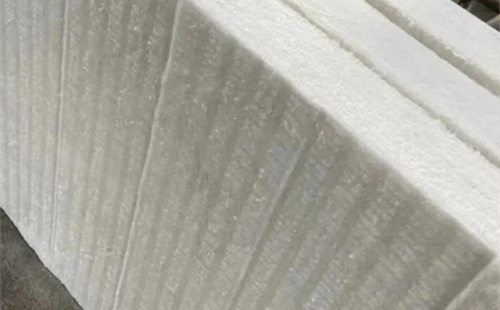
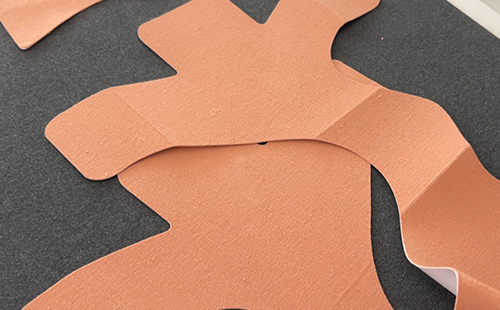
Core Pain Points of Traditional Cloth Inserted Rubber Cutting Processes
Cloth inserted rubber features elastic rubber plus tough fabric layers, requiring strict control on cutting force and temperature. Conventional cutting methods have obvious drawbacks:
1. Manual Cutting: Low Efficiency, Severe Delamination and Rough Edges
Manual cutting uses utility knives and scissors with templates. Cloth inserted rubber is tough and rigid, making cutting labor-intensive and slow. Thick rubber sheets require multiple workers and bring high labor cost. Uneven manual pulling force easily tears fabric layers and triggers interlayer separation and loose fiber ends, resulting in heavy burrs and lots of post trimming work. Custom gaskets and shock pads have poor dimensional consistency and high rework rate, which may cause poor sealing and uneven stress after assembly. Manual nesting depends on experience and wastes expensive specialty cloth inserted rubber raw materials.
2. Laser Cutting: Thermal Damage to Composite Structure, Performance & Environmental Risks
Laser is thermal processing. Rubber melts and becomes sticky under heat, while internal fabric layers get carbonized and brittle. Cut edges turn hard and layers separate, destroying the composite reinforced structure. Elasticity, sealing and tear resistance drop sharply, shortening gasket service life. Cutting releases rubber smoke and burnt fabric odor, requiring large exhaust treatment equipment and raising environmental compliance cost. Thick cloth inserted rubber often suffers incomplete cutting and backside molten slag, leading to low yield and disqualification for high-end sealing orders.
3. Die Stamping: Squeezing & Delamination, High Mold Cost & Low Flexibility
Die stamping separates material by high pressure. Strong compression squeezes rubber and pulls fabric layers, causing layer shifting and peeling. Permanent indentations remain on rubber surface and reduce rebound performance, resulting in poor fitting after gasket assembly. Thick cloth inserted rubber brings heavy die abrasion and high maintenance cost. Each custom-shaped gasket or shock absorber requires dedicated cutting dies with long lead time and high cost. For multi-style small-batch custom orders, high apportioned cost makes many high-value orders unavailable.
Core Advantages of Vibration Knife Cutting Machine for Cloth Inserted Rubber
Targeting cloth inserted rubber’s composite structure prone to delamination and rubber rebound, our vibration knife cutting machine is optimized on blade vibration mode, cutting force control and vacuum holding. It stably processes cloth inserted rubber sheets and rolls with different hardness and fabric layers.
1. Room-temperature Physical Cold Cutting, No Thermal Damage, Preserve Full Composite Performance
The machine cuts by high-frequency micro-amplitude blade vibration without heat generation. It will not melt rubber or carbonize fabric layers. It fully retains elasticity, sealing property and fabric reinforcement structure. Tear resistance and wear resistance stay unchanged after cutting, ensuring longer service life of gaskets and shock pads. No irritating smoke is produced during cutting, so large exhaust treatment equipment is unnecessary and environmental compliance is easy to achieve.
2. Vertical Flexible Shearing, No Delamination & No Burrs, Clean Cuts Without Trimming
Adopting vertical high-frequency shearing mode, the machine generates very low lateral impact. The blade penetrates material steadily without horizontal pulling of fabric layers, fundamentally eliminating interlayer peeling, loose threads and edge burrs. Cut pieces have tight and smooth edges, rubber and fabric layers stay closely bonded without burrs, stringing or missing corners. No manual secondary grinding or trimming is needed, parts can go directly to assembly, improving finished quality and production efficiency simultaneously.
3. Controlled Force & Vacuum Hold-Down, Restrain Rebound Deformation, Stable Precision
Cutting force is precisely adjustable. Zoned vacuum table firmly fixes sheets to prevent sliding and squeezing during cutting, effectively offsetting dimensional deviation caused by rubber rebound. Cutting accuracy is stably controlled within ±0.1mm. All pieces in batch production maintain consistent size and contour. Sealing gaskets fit tightly after assembly to eliminate leakage risks, greatly lowering rework and scrap rates, fully meeting precision sealing assembly requirements for industrial applications.
4. Mold-Free Custom Shape Cutting, Flexible for Orders of All Sizes
Compatible with mainstream drawing formats including DXF, CAD and PLT. Import drawings and generate cutting paths in one click. Standard square rubber sheets, round sealing gaskets, irregular shock blocks, non-standard flange gaskets and hollow components can be formed precisely in one pass without any cutting dies. New samples can be finished on the same day for small batch custom orders. Switching styles only needs editing digital drawings within minutes, matching the current multi-style fast-delivery order model.
5. Intelligent Nesting & Common-Line Cutting, Reduce Raw Material Waste
Built-in intelligent nesting system automatically recognizes shapes and optimizes layout, supporting common-edge cutting, tight nesting and nested arrangement to fully utilize sheet scraps. Material utilization increases over 10% compared with manual nesting. Cloth inserted rubber raw material is costly, so optimized nesting brings obvious cost savings and higher net profit for mass production.
6. Roll Feeding & Multi-Layer Stack Cutting, Labor Saving & Higher Productivity
The machine accepts full rolls of cloth inserted rubber directly. It can be fitted with unwinding, deviation correction and feeding system to eliminate manual spreading, alignment and fixing. It automatically feeds next roll after finishing one batch. Thin cloth inserted rubber sheets support multi-layer stack cutting to produce multiple finished pieces in one single pass. One machine can replace 4-6 skilled cutters, greatly cutting labor cost and stabilizing output during peak seasons.
Customized Advantages of Dedicated Cloth Inserted Rubber Cutting Machine
We focus on industrial rubber material cutting and optimize machine functions for cloth inserted rubber composite structure and production scenarios, different from universal cutting machines:
1. Custom Cutting Solution for Composite Structure
Optimized matching logic of blade vibration frequency, feed speed and cutting force for rubber-fabric composite structure. Stable cutting quality is achieved for materials with different fabric layers and rubber hardness, guaranteeing non-delamination, no stringing and smooth cutting surfaces.
2. Full-Thickness Adaptable Configuration
Adjustable stroke cutting head and force control system cover full range from thin sealing cloth inserted rubber film to thick industrial rubber plate. Thin material will not deform under pressure and thick sheets can be cut through in one pass. No frequent blade replacement required, one machine handles all types of cloth inserted rubber.
3. Special Nesting Optimization for Sealing Industry
Optimized common-edge cutting and nested layout algorithms for gaskets, flange washers and shock pads to maximize sheet utilization. Batch orders can be imported quickly for production scheduling to cut manual nesting time and boost line efficiency.
4. Full-Cycle After-Sales Guarantee
Free sample cutting test for customers to verify cutting quality and precision before cooperation. On-site installation, commissioning and hands-on operator training after delivery. Fast response for daily technical issues, local spare parts delivery and lifelong free software upgrades to keep stable production.
Conclusion
The main challenges of cloth inserted rubber cutting are preventing interlayer separation, controlling rubber rebound deformation and avoiding thermal damage to composite performance. Traditional manual, laser and die stamping either produce many defects and high rework rate or lead to high cost and low flexibility, unable to meet the trend of high-precision and customized industrial components.
CNC vibration knife cold cutting machine delivers no thermal damage, non-delamination, burr-free edges, stable high precision, mold-free flexible production and lower material & labor cost. It solves all cloth inserted rubber cutting pain points. It cuts standard rubber blanks efficiently and processes complex custom sealing and shock absorption parts precisely, serving as the preferred automatic blanking equipment for rubber product industry.
If you need cutting service for cloth inserted rubber and other industrial rubber products, welcome to send samples for testing. We provide customized cutting plans and equipment quotations.