Packaging manufacturers specializing in custom protective inner liners including honeycomb panels, foam cushions and corrugated inserts have long struggled with outdated cutting solutions. Traditional manual cutting and steel rule die stamping cannot meet the rising market demand for personalized irregular liners, small-batch orders and strict dimensional consistency. This article sorts out core industry pain points of conventional cutting methods, conducts a full comparison between traditional craft and CNC vibrating knife cutting equipment, lists all applicable packaging materials, and analyzes the physical characteristics of each material matched with cutting logic.
Core Pain Points of Traditional Cutting for Packaging Inserts
The first prominent problem is high labor cost and extremely low production efficiency. Manual cutting relies entirely on workers to trace templates and cut materials with utility knives. For complex irregular inner liners matching special-shaped products, one worker can only finish a small quantity of finished pieces per day. Mass production requires hiring dozens of cutting staff, which brings continuous labor expenditure for packaging factories. Meanwhile, manual cutting has large dimensional errors up to 2mm, leading to loose fitting between liners and finished goods during transportation, failing to provide stable shock protection.
Second, die stamping brings heavy mold cost and long delivery cycle. Every new liner design needs customized metal cutting dies, costing hundreds to thousands of dollars and taking 3 to 7 days to manufacture. If clients adjust product sizes or modify liner shapes, factories have to remake dies repeatedly, increasing extra production costs and delaying order delivery. Besides, die stamping will squeeze honeycomb boards and foam materials under pressure, causing edge collapse, core delamination, burrs and material waste. Thick honeycomb panels over 30mm cannot be fully cut through by standard dies, resulting in a high defective rate.
Third, traditional cutting causes severe raw material waste and poor material utilization. Manual layout depends on workers’ personal experience, with low nesting efficiency and plenty of unused blank materials. Fixed die shapes cannot flexibly arrange small liner parts, generating massive leftover foam and honeycomb paper. Long-term material loss greatly squeezes corporate profit margins. What’s more, traditional equipment lacks automatic visual positioning, and workers spend extra time aligning materials, further lowering daily output.
Fourth, traditional processing cannot support diversified customized orders. Most manual and die cutting devices are only suitable for mass production of single-size regular liners. For small-batch personalized orders with unique curved outlines, traditional cutting ways cannot realize fast sample making, making factories lose many customized packaging cooperation opportunities.
Traditional Cutting VS CNC Vibrating Knife Cutter: Unique Advantages for Packaging Liner Production
Equipped with high-frequency oscillating blade cutting technology and large vision camera positioning system, CNC vibrating knife cutting machine completely eliminates all bottlenecks of traditional packaging liner processing. Its competitive advantages are listed as follows:
- Zero die cost and ultra-fast sample & order response. The machine supports direct import of CAD design drawings without customized metal dies. Factories can finish custom honeycomb or foam liner samples within several minutes, shortening sample delivery cycle greatly and perfectly adapting to small-batch personalized packaging orders.
- Micron-level cutting precision and intact material structure. The positioning accuracy reaches ±0.05mm. The high-speed vibration blade contacts materials for an extremely short time without squeezing or compressing honeycomb cores and foam structures. All cut liners maintain unified size, flat vertical cutting edges without burr, collapse or delamination, ensuring tight fitting with products and reliable shock absorption during storage and logistics.
- Dramatic labor reduction and multiplied production speed. The built-in vision system automatically identifies material outlines and generates optimal intelligent nesting paths. A single operator can manage multiple cutting machines simultaneously, replacing 4-7 manual cutting workers. The automatic cutting flow runs uninterruptedly, with processing speed 3 to 5 times faster than manual operation, greatly lifting factory daily production capacity.
- Higher material utilization and reduced raw material loss. Intelligent nesting software automatically arranges liner patterns to maximize material usage, cutting material waste by over 12% compared with manual and die cutting. The vision module can automatically avoid material defects like stains and holes, further reducing scrap loss for foam and honeycomb paper.
- Simple operation and low daily maintenance threshold. The visual graphic operation panel is easy to learn; new staff can master complete operation procedures within half an hour without professional cutting experience. Blade replacement and daily cleaning work are simple, and vulnerable spare parts have long service life, requiring little daily maintenance investment.
- Cold cutting without thermal damage, suitable for all sensitive packaging materials. Vibrating knife adopts physical cold cutting with no high temperature generated. It will not scorch foam, melt adhesive layers or deform honeycomb paper, no secondary trimming or edge repairing work is needed after cutting, saving post-processing labor hours and meeting global eco-friendly packaging standards.
Full List of Materials Suitable for Vibrating Knife Packaging Liner Cutting
This digital cutting device covers almost all mainstream cushion and structural materials widely used in gift packaging, electronic product protection, logistics transportation and industrial equipment lining, the complete applicable material list includes:
Paper & honeycomb structural materials: paper honeycomb board, corrugated cardboard, gray board, KT board, folding carton paper, honeycomb corner protector, lightweight composite paper board
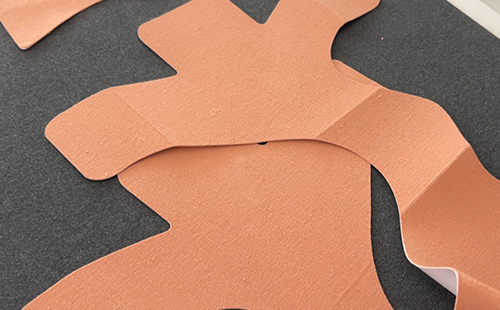
Foam cushion materials: EPE pearl cotton, EVA foam, PU sponge, XPS foam, composite foam lining, back adhesive foam sheet
Leather & textile packaging materials: PU leather, microfiber, felt, oxford cloth, soft textile lining for gift boxes
Composite shock-absorbing materials: fiber composite board, aramid honeycomb sheet, rubber shock pad, silicone soft sheet
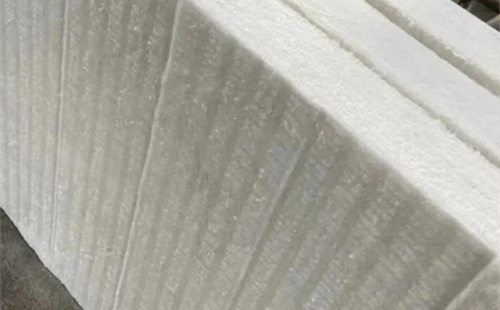
Other packaging auxiliary materials: soft PVC film, insulation cotton, self-adhesive sticker, lightweight plastic liner sheet
Physical Characteristics of Applicable Packaging Materials & Matching Cutting Logic
Each packaging material has exclusive physical properties, and the vibrating knife cutter automatically adjusts vibration frequency, cutting depth and blade type to match different material features, avoiding common processing defects of traditional cutting:
- Paper honeycomb board: hollow hexagonal core structure, light weight but easy to collapse and delaminate under extrusion force. High-frequency vibration blade cuts vertically with tiny pressure, protecting the internal honeycomb core from collapse, keeping the surface paper tightly bonded without peeling, and forming smooth vertical cutting sections.
- EPE pearl cotton & EVA foam: closed-cell elastic porous structure, easy to be compressed and deformed by die stamping. The short contact time of oscillating blade avoids squeezing foam layers, fully retains original elasticity and shock-absorbing performance, and prevents edge stretching and warping.
- Back adhesive composite foam: coated with sticky glue layer, easy to stick to traditional cutting tools and cause material layering. Cold vibration cutting generates no heat to melt adhesive, realizing clean separation of composite layers without residual glue on cut edges.
- Corrugated cardboard & gray board: layered fiber structure, prone to rough fracture edges and paper burrs under manual cutting. Medium-frequency vibration blade realizes neat cutting without paper tearing, no extra polishing work needed.
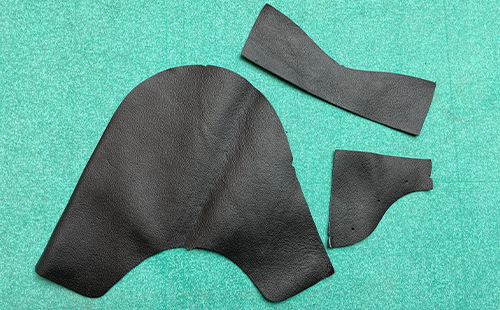
- PU leather, felt and textile lining: interwoven fiber texture, easy to fray at edges after cutting. Vibration blade instantly severs fiber threads to reduce loose threads, maintaining neat liner appearance for high-end gift packaging.
- Aramid composite honeycomb sheet: high tensile strength lightweight material, easily damaged by strong cutting impact. Low-amplitude precise vibration cutting reduces cutting force, protecting the composite fiber structure without cracking.
Conclusion
For packaging factories producing custom protective inner liners, replacing manual and die stamping cutting with CNC vibrating knife cutting equipment is an efficient solution to solve high labor cost, low efficiency, large material waste and poor customization capacity. Integrated with visual automatic positioning, intelligent nesting and cold vibration cutting technology, this machine can process most mainstream packaging cushion and structural materials, optimizing the whole production flow and shortening production cycle significantly. It can bring obvious cost reduction and production efficiency improvement for packaging enterprises of all sizes. If you are looking for automatic cutting equipment to upgrade your packaging liner production line, feel free to contact us to inquire about detailed machine parameters and real factory application cases.