Enterprises producing fur coats, faux fur jackets and granular fleece apparel face prominent production bottlenecks when using outdated cutting solutions. Natural fur, artificial plush and granular fleece feature dense surface pile combined with woven backing cloth; improper cutting will pull loose fibers, cause massive material waste and restrict daily output. Traditional cutting processes rely on paper patterns and manual labor, which cannot support long-hour continuous production, and always bring unstable dimensional accuracy and damaged plush pile. These widespread industry pain points raise labor costs, increase raw material scrap rate and slow order delivery speed for fashion garment manufacturers.
Three classic traditional cutting methods are widely used in plush garment workshops, all with obvious inherent drawbacks unsuitable for mass and flexible custom production. Manual scissors and electric knife cutting fully depend on skilled workers and physical paper templates. Workers need to manually place paper patterns on plush fabrics one by one, which consumes plenty of labor and preparation time. Uneven cutting force tears plush fibers and creates messy shedding edges; workers require regular rest so 24-hour non-stop production cannot be realized. Random manual layout leads to severe waste of expensive fur and granular fleece materials, and dimensional deviation easily appears on finished garment pieces. Fixed steel die cutting needs customized molds for every clothing style, generating extra mold fees and long production lead times. Rigid stamping extrusion flattens fluffy pile permanently and destroys the soft texture of plush fabrics; one mold only matches a single fixed outline, unable to respond quickly to multi-style small-batch orders. Laser thermal cutting separates materials via high temperature, which scorches fur pile to turn yellow, melts fabric backing and releases irritating toxic smoke; high heat hardens plush fibers and ruins the premium appearance of finished outerwear.
Digital vibration knife cutting equipment completely breaks all limitations of traditional plush garment cutting crafts. It supports direct digital pattern data input without any paper templates, eliminating paper pattern production and placement labor costs. Adopting adjustable high-frequency cold vibration cutting mode, the blade only cuts through fabric backing without scratching or breaking surface plush, realizing complete fur protection and low material loss. The whole machine supports stable 24-hour uninterrupted automatic operation without rest intervals, effectively solving factory output shortages caused by labor limits. Equipped with intelligent automatic nesting software, the system arranges pattern pieces compactly on raw rolls to greatly improve material utilization rate and cut procurement expenditure. Simple one-click operation reduces worker training difficulty, and the device freely processes complex irregular garment outlines for fur coats, faux fur hoodies and granular fleece outerwear.
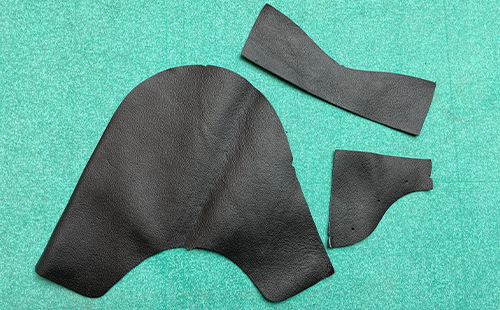
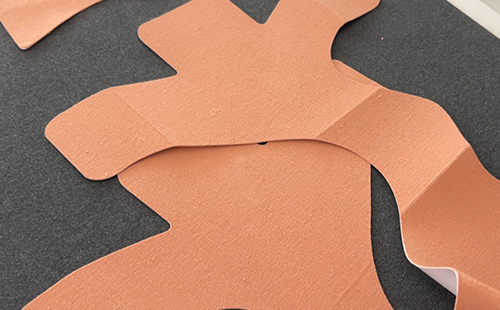
This multi-functional digital vibration knife cutting machine covers all mainstream plush raw materials widely applied in fashion apparel manufacturing. Applicable materials include genuine mink fur, sheep shearling fur integrated fabric, long-pile faux fur, short-pile imitation rabbit fur, granular fleece lamb wool, coral velvet composite cloth, thick plush composite textile, printed plush fabric, suede lining, PU leather matching plush, woven plush backing cloth, thick warm coat plush material. Every plush material has unique pile thickness, fiber density and backing ductility that directly affect cutting effect, and the machine automatically adjusts cutting speed, vibration frequency and down pressure to fit different soft and thick plush textiles.
Genuine mink fur features delicate thin pile and compact leather base; manual or die cutting easily cuts off surface fluff and leaves bare ugly spots, laser heat yellows fur and hardens leather plate. Sheep shearling fur integrated material owns thick soft wool layer, extrusion stamping flattens pile and loses natural fluffy touch. Long-pile faux fur has loose long fibers, uneven cutting force pulls massive fluff to generate serious waste and messy edges. Short-pile imitation rabbit fur carries dense fine fibers, thermal laser processing makes fiber brittle and fades surface luster. Granular fleece lamb wool has granular raised surface, rigid cutting squeezes grain shape and destroys uniform particle texture. Coral velvet composite cloth combines plush surface and thin woven base, high temperature causes interlayer separation and pile shedding. Thick plush composite textile has multi-layer bonded structure, forced tearing by traditional tools creates delamination and fiber scattering. Printed plush fabric is covered with surface ink patterns, extrusion cutting shifts printed graphics and wastes high-cost plush rolls. Suede lining features matte short pile, rough cutting scratches suede surface and lowers garment grade. PU leather matching plush combines smooth leather and fluffy pile, thermal melting peels off leather surface coating. Woven plush backing cloth has tight warp and weft yarns, unadjusted blade pressure creates incomplete cutting and dimensional error. Thick warm coat plush material has high fiber density, static pressure mold cutting compresses pile permanently and affects finished clothing appearance.
Different from traditional cutting’s paper pattern cost, heavy labor, fur damage and discontinuous operation drawbacks, digital vibration knife cold cutting separates fabric backing through tiny vertical high-frequency vibration without harming surface plush fibers. Direct digital data input removes paper pattern making links and saves manual layout hours. Intelligent compact nesting minimizes leftover plush scraps and reduces raw material waste significantly. Continuous 24-hour automatic running greatly boosts factory daily output and solves labor shortage troubles. One single machine adapts all natural fur and artificial plush apparel materials, removing repeated mold development fees for various fashion outerwear styles. Garment factories can finish sample trial cutting and mass continuous production on one workstation, cut labor and raw material cost, stabilize finished garment quality and shorten customer order delivery cycle simultaneously.