Many manufacturers producing tote bags, canvas accessories and printed textile goods are constantly troubled by multiple production flaws brought by outdated traditional cutting methods. When processing blank canvas and digitally printed cloth, conventional cutting solutions cannot guarantee accurate pattern alignment, and cut edges often come with obvious fraying and fiber pulling. These common industry pain points reduce finished product grade, increase manual rework volume and raise overall material waste rate, which seriously affects factory production efficiency and profit margins.
Traditional canvas cutting methods mainly include manual scissors cutting, fixed die stamping and laser cutting, each with obvious limitations. Manual cutting fully relies on workers’ operation experience; it is slow in speed, hard to keep consistent dimensional accuracy, and operators cannot accurately align irregular printed patterns, leading to large batches of defective products. Fixed die cutting requires customized molds for every pattern, the mold opening cycle takes several days and costs extra fees, and rigid extrusion will stretch canvas fabric to cause printed pattern offset, with rough edges full of loose fibers. Laser cutting relies on high-temperature melting to separate cloth, which will scorch canvas edges, produce pungent smoke and harmful odor, and high heat makes printed layers discolor and crack, unsuitable for high-grade printed canvas products.
Vibration knife cutting equipment equipped with large-format CCD visual automatic edge tracking technology completely eliminates all defects of traditional canvas cutting techniques. The built-in high-definition camera quickly scans the surface of blank canvas and digital printed fabrics, automatically identifies pattern outlines and generates precise cutting paths without manual positioning calibration. The blade works through high-frequency tiny vertical vibration to complete cold cutting without extrusion or high temperature damage. Compared with old cutting processes, this machine runs faster with stable micron-level cutting precision, all cut edges stay smooth without fiber fraying, and the whole cutting process produces no smoke or peculiar smell, meeting environmental production standards. The operation logic is extremely simple; staff only need to import design drawings with one click to start cutting, supporting flexible small-batch customization and mass production without repeated mold replacement.
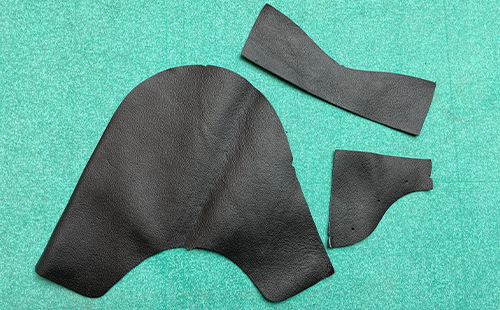
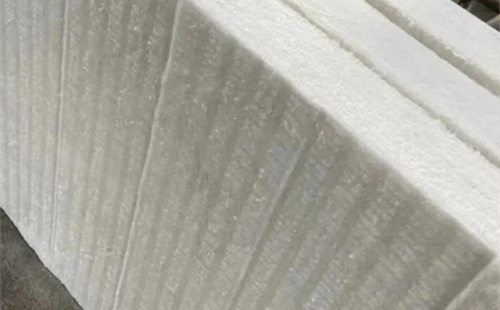
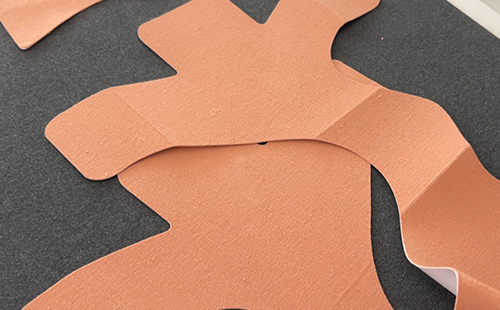
This intelligent vibration knife cutting machine supports a wide range of textile raw materials commonly used in bag production. The applicable materials cover blank cotton canvas, digital printed canvas, thick industrial canvas, polyester blended fabric, oxford cloth, linen cloth, non-woven fabric, PU composite cloth, flocking fabric and thin cotton lining cloth. Each material has unique physical characteristics that create different cutting difficulties, and the machine can automatically adjust cutting speed, vibration frequency and pressure to match different fabric textures.
Blank cotton canvas features thick woven fiber structure, moderate hardness and slight elasticity; manual or die cutting easily pulls loose fibers to form rough burrs, and extrusion force will stretch the cloth to deform sizes. Digital printed canvas is covered with ink printing layers on the surface; high temperature laser cutting will burn printing patterns and cause color fading, while rigid stamping shifts printed graphics. Thick industrial canvas has high density and heavy gram weight, hard to cut through evenly with hand tools, and uneven force results in incomplete cutting. Polyester blended fabric has tight interwoven synthetic fibers, prone to melting under laser heat and hard to get neat edges with scissors. Oxford cloth has waterproof coating on the surface, which peels off easily under extrusion cutting. Linen cloth contains coarse natural fibers, easy to split and form long burrs after cutting. Non-woven fabric has no fixed weaving structure, easy to tear and deform during stamping. PU composite cloth combines soft fabric and thin plastic layer; improper cutting causes delamination between layers. Flocking fabric has dense short fluff on the surface, traditional cutting drags fluff to form messy edges. Thin cotton lining cloth is soft and thin, easy to shift and wrinkle when fixed poorly during manual cutting.
Different from the extrusion, high-temperature melting and forced tearing of traditional cutting modes, the vibration knife adopts cold vibration cutting without any extra pressure or heat damage to fabrics. The large visual automatic positioning system completely removes human errors in pattern alignment, realizing zero offset cutting for all printed canvas. One single machine can handle all the above bag fabrics, eliminating repeated mold customization costs for various styles. Factories can finish blank and printed canvas cutting on one workstation, lowering equipment investment, reducing material waste and simplifying the whole production workflow of tote bags and textile accessories.