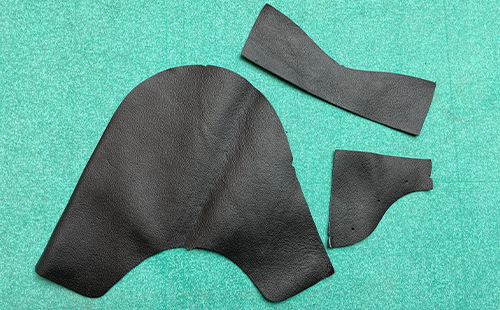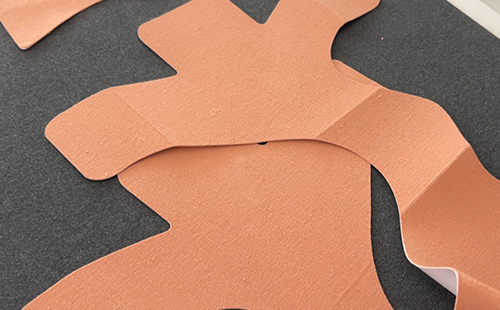
Factories producing labor safety shoes, automotive interior parts and household foam supplies are constantly plagued by low-efficiency and low-precision foam cutting with traditional processing methods. Sponge interlayers inside safety shoes are core shock-absorbing accessories, whose dimensional consistency directly affects the wearing comfort and protective performance of finished safety shoes. Conventional cutting methods easily cause uneven thickness, irregular outlines and inconsistent sizes of sponge liners, generating a large number of defective products. These prominent industry pain points waste foam raw materials, increase manual correction labor, slow down overall production speed and greatly compress factory profit margins.
Traditional foam cutting solutions mainly consist of manual knife cutting and fixed die stamping, both with obvious limitations. Manual cutting relies fully on workers’ hand control; cutting speed is extremely slow, and each sponge piece has different dimensional errors due to unstable hand strength. When processing complex curved sponge interlayers for safety shoes, workers cannot form smooth continuous edges, resulting in burrs and uneven buffer thickness. Fixed die cutting requires customized molds for every single sponge specification, which brings extra mold opening costs and long production preparation cycles. Rigid stamping force squeezes soft sponge to produce compression deformation, making the actual size of finished sponge smaller than the design standard, and one mold can only process one single shape, unable to meet flexible customized orders of multi-style safety shoes.
Vibration knife cutting equipment completely breaks through the bottlenecks of traditional sponge cutting technology. Operators only need to draw or import cutting graphics on the supporting computer system, and the machine will automatically complete fully automatic cutting with high precision and high speed. The high-frequency vibration blade adopts cold cutting mode without strong extrusion, so soft sponge materials will not be compressed or deformed during cutting. The whole cutting edge is flat and smooth without rough burrs, effectively ensuring uniform thickness of safety shoe sponge interlayers. The equipment features simple operation logic with low learning cost for new staff. Without repeated mold replacement, it supports small-batch customization and mass production simultaneously. Beyond labor protection shoe sponge processing, this cutter is widely applicable to the production of automotive interior foam accessories and various household foam supplies, realizing multi-scene production with one single device.
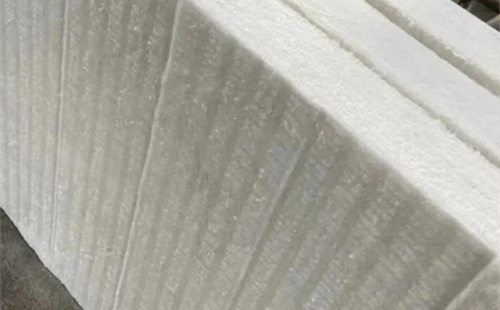
This multifunctional vibration knife cutting machine supports a wide range of foam and sponge materials commonly used in footwear, auto interior and home goods industries. Applicable raw materials include polyurethane soft sponge, high-density shock-absorbing foam, EVA foam backing, XPE foam, latex foam, composite foam liner, slow-rebound memory foam, hard foam board, flocked foam and sound insulation foam. Each material has unique physical characteristics that affect cutting results, and the machine can automatically adjust cutting speed, vibration frequency and down pressure to match different foam hardness, elasticity and thickness.
Polyurethane soft sponge is light and highly elastic; manual cutting will squeeze and distort its internal pores, causing uneven local thickness. High-density shock-absorbing foam has compact internal structure, die stamping easily leaves permanent indentations on the surface. EVA foam backing has moderate hardness and certain toughness, improper stamping leads to edge cracking. XPE foam features closed-cell structure, strong extrusion force will make foam shrink permanently. Latex foam is soft and sticky, manual blade cutting pulls material to form irregular rough edges. Composite foam liner is bonded by multiple layers of different foams, traditional cutting easily causes interlayer separation. Slow-rebound memory foam deforms easily under static pressure, unable to restore original shape after die extrusion. Hard foam board has poor flexibility, uneven manual cutting force results in incomplete cutting. Flocked foam has short fluff on the surface, traditional cutting drags fluff to form messy edges. Sound insulation foam has porous loose structure, hard extrusion will collapse its internal sound-absorbing pores.
Different from the strong extrusion and manual forced cutting of traditional processes, vibration knife relies on tiny vertical high-frequency vibration to separate foam materials without static pressure deformation. Digital graphic input realizes accurate size control, eliminating dimensional errors caused by manual operation. One machine covers all foam raw materials used in safety shoes, automotive interiors and household products, removing continuous mold development expenses for various product styles. Manufacturers can finish all foam cutting procedures on one workstation, reduce raw material waste, cut labor costs and shorten the whole production cycle of foam finished parts.