Enterprises specializing in automotive refitting interior accessories, such as seat covers, full-surround floor mats and trunk liners, face prominent production limitations caused by outdated cutting technology. Automotive interior finished products require precise fitting to vehicle contours, while raw materials are mostly multi-layer composite leather and foam with delicate surface layers. Conventional cutting modes easily cause dimensional deviation, material delamination, burnt edges and excessive raw material waste, and cannot support long-hour uninterrupted production. These common industry pain points push up labor and procurement costs, prolong order delivery cycles and reduce factory competitiveness in customized auto parts market.
Three mainstream traditional cutting methods are widely used in auto interior workshops, all carrying obvious inherent flaws unsuitable for composite leather and foam processing. Manual cutting relies entirely on paper patterns and manual positioning by workers. Operators spend lots of time drawing and laying templates, and unstable hand tension stretches leather and foam to form jagged uneven edges. Workers need regular rest breaks so continuous mass production cannot be realized, and random manual layout creates massive leftover scraps of high-cost composite materials. Fixed steel die cutting needs customized molds for every car model and mat style, bringing high mold fees and long development cycles. Rigid stamping extrusion squeezes multi-layer composite structures, leading to permanent foam compression and leather surface indentation; one mold only matches single outline, unable to respond quickly to multi-model mixed small orders. Laser cutting adopts high-temperature thermal separation, which melts PU and microfiber surface coatings, scorches foam inner cores and releases toxic pungent smoke; high heat also causes composite layer separation and permanent material shrinkage, damaging the fitting effect of finished auto mats.
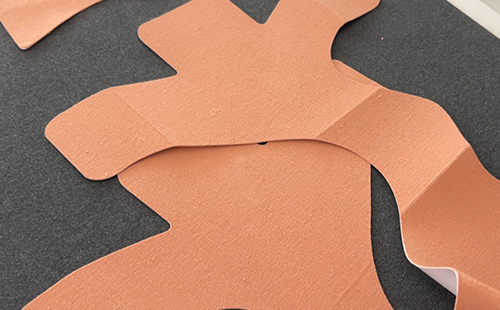
Vibration knife cutting equipment equipped with automatic feeding platform and intelligent nesting system completely solves all efficiency and quality drawbacks of traditional auto interior cutting crafts. The auto feeding structure realizes seamless roll material feeding, supporting non-stop long-term cutting without frequent manual material replacement. Built-in digital layout software automatically arranges cutting outlines compactly on raw rolls to maximize material utilization and cut long-term raw material expenditure. Adopting high-frequency cold vibration cutting mode, the blade separates materials via tiny vertical vibration without heat or strong extrusion force, protecting leather surface coating and foam elastic core completely, with smooth burr-free cut edges. The machine adapts to full-surround mats, half-surround mats, sun visors, trunk liners and seat covers at one time, freely processing complex irregular vehicle contours without repeated mold customization. Simple digital file import reduces worker training difficulty, and one operator can complete full production flow to greatly save labor cost.
This multi-functional CNC vibration knife cutting machine covers all mainstream composite raw materials widely applied in automotive interior production. Applicable materials include microfiber leather, PU synthetic leather, genuine cowhide, rebound sponge liner, XPE closed-cell foam, leather-XPE composite sheet, flocking decorative leather, soft foam padding, waterproof coated fabric, elastic composite upholstery, thick trunk composite mat, thin sun visor fabric, anti-slip rubber bottom layer, multi-layer laminating seat material, new energy vehicle soft interior cloth. Each material has unique fiber structure, foam density and surface coating properties that directly affect cutting stability, and the machine automatically adjusts cutting speed, vibration frequency and vacuum adsorption pressure to fit different material thickness and softness.
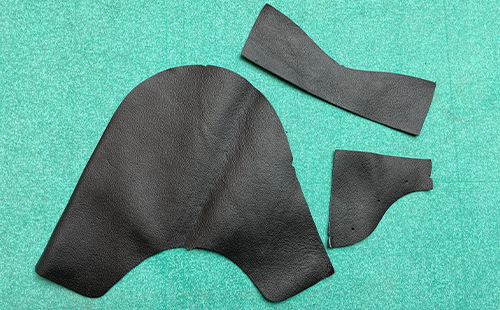
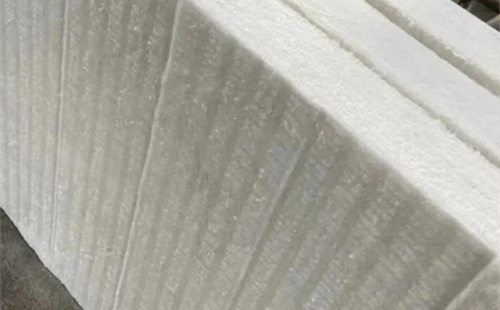
Microfiber leather features dense ultra-fine fiber base and thin PU coating; laser high temperature melts surface film, die extrusion leaves permanent indentations that affect interior appearance. PU synthetic leather has soft elastic surface layer, uneven manual pulling creates stretched deformed cut pieces with irregular outlines. Genuine cowhide owns complete natural grain, rough cutting scratches grain and lowers finished product grade. Rebound sponge liner has porous elastic structure, static mold pressure collapses buffer pores and weakens shock absorption performance. XPE closed-cell foam is lightweight with stable resilience, continuous thermal cutting causes uneven shrinkage in mass batches. Leather-XPE composite sheet bonds leather and foam layers, extrusion cutting triggers interlayer separation and incomplete cutting edges. Flocking decorative leather carries short surface fluff, high temperature hardens fluff and ruins soft touch. Soft foam padding has loose inner bubbles, unadjusted blade vibration leads to incomplete penetration. Waterproof coated fabric has tight woven texture, manual positioning shift causes asymmetric seat cover outlines. Elastic composite upholstery combines fabric and foam, long-time manual cutting accumulates dimensional errors. Thick trunk composite mat has multi-layer bonded structure, forced tearing produces messy fiber burrs. Thin sun visor fabric is ultra-smooth and thin, frequent material shifting leads to inconsistent finished sizes. Anti-slip rubber bottom layer has strong toughness, thermal cutting makes rubber brittle and loses anti-slip performance. Multi-layer laminating seat material stacks leather, foam and cloth, improper cutting pressure creates layered gaps. New energy vehicle soft interior cloth features lightweight flexible fiber, heat processing fades surface printing patterns.
Different from traditional cutting’s heavy labor, discontinuous operation, thermal damage and high mold cost drawbacks, vibration knife auto feeding cold cutting realizes automatic roll feeding without frequent manual intervention. Intelligent compact nesting minimizes leftover composite scraps and improves raw material utilization significantly. Cold vibration cutting avoids extrusion and heat harm to all leather and foam auto interior materials, keeping complete surface coating and foam elasticity. One single machine processes all auto mat, seat cover and trunk liner materials, removing repeated mold development fees for thousands of vehicle models. Auto interior manufacturers can realize 24-hour continuous unattended production on one workstation, boost daily output, cut labor and raw material waste, stabilize finished fitting precision and shorten customer order delivery cycle simultaneously.