Understand Material Properties: Core Restrictions of Fish Paper Cutting
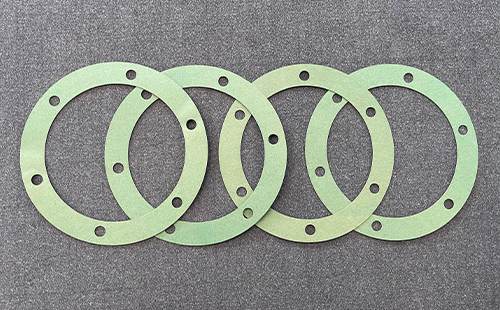
Fish paper, also known as shell paper, is a compact insulating cardboard made of cotton fiber or wood fiber. With excellent voltage resistance, toughness and insulation stability, it is commonly fabricated into insulating gaskets, battery diaphragm spacers, motor slot wedges and electrical lining pads. Its unique physical and chemical properties determine the strict boundaries of cutting processes, which are the key basis for equipment selection.
1. Wide thickness range with distinct mechanical differences
Common fish paper thickness ranges from 0.05mm ultra-thin type to 1.5mm thick type. Ultra-thin fish paper is brittle and fragile, prone to edge breakage and deformation under slight pulling force during cutting. Thick fish paper features dense internal structure, and ordinary cutting tools easily produce inclined sections, residual burrs and wire drawing defects.
2. Insulation performance is non-negotiable
Insulation capacity is the core functional indicator of fish paper. High-temperature cutting will melt and carbonize surface fibers, leaving conductive carbon residues on the cutting edge, which directly reduces insulation grade and causes electrical leakage risks. Extrusion stamping will lead to internal fiber fracture, delamination and fuzzing, damaging the sealing and insulation effect. This explains why many cutting methods can cut through fish paper but fail to meet industrial insulation standards.
3. Dominated by irregular small parts with differentiated batch demands
Most fish paper finished products are special-shaped insulating gaskets and small electrical accessories with complex contours. Factory orders show obvious polarization: large-batch standard parts and small-batch customized profiled parts coexist, requiring cutting equipment with strong flexible processing capability.
4. Low material cost but high defect loss cost
The unit price of raw fish paper is low, but defective cut pieces cannot be repaired and reused. Unqualified insulating parts flowing into subsequent assembly links will easily trigger electrical safety accidents. Therefore, fish paper cutting requires far higher yield rate than ordinary packaging materials.
4 Mainstream Fish Paper Cutting Processes: Principles, Pros & Cons and Application Scenarios
At present, fish paper processing in the industry mainly includes four processes: manual cutting, die punching, laser cutting and CNC oscillating knife cutting. Each process has huge differences in precision, insulation retention, production cost and efficiency.
1. Manual Cutting — R&D Sampling & Emergency Material Supplement
Manual cutting relies on utility knives or scissors with fixed templates for blanking, which is the most basic processing method.
Advantages: Extremely flexible, no equipment investment required, suitable for prototype development, sporadic material supplement and ultra-large-size single-piece processing.
Disadvantages: Large dimensional errors, rough oblique cutting edges and poor batch consistency; extremely low efficiency, unable to support mass production; highly dependent on worker experience, ultra-thin fish paper is easy to crack during cutting.
Applicable Scenarios: Only for R&D sampling and temporary material supplement, not applicable for formal mass production.
2. Die Punching — Mass Production of Standard Parts
Die punching shapes fish paper through customized metal dies matched with punching equipment, serving as the traditional mainstream process for large-batch fish paper processing.
Advantages: Fast repetitive cutting for identical patterns, stable product consistency and low unit processing cost for mass orders.
Disadvantages: High custom die cost and long production cycle, extremely high style-changing cost for small-batch special-shaped orders; stamping pressure easily causes indentation, fiber delamination and edge fuzzing on thin fish paper; thick fish paper often has unvertical sections and residual burrs, requiring secondary trimming; unable to adapt to frequent customized style updates.
Applicable Scenarios: Large-batch processing of fixed-size standard insulating gaskets and washers.
3. Laser Cutting — Low-Standard Special-Shaped Sampling
Laser cutting melts and vaporizes materials through focused high-temperature laser beams, featuring high graphic freedom and precision.
Advantages: No mold making required, flexible graphic modification; high cutting precision, capable of processing micro holes and ultra-fine special-shaped structures; high automation with compact nesting to improve material utilization.
Disadvantages: Typical high-temperature thermal cutting process. The cutting edge will be carbonized and produce conductive carbon dust, seriously damaging fish paper insulation performance and hidden dangers for electrical equipment; thin fish paper is prone to edge burning and curling, while thick materials have slag hanging on sections; cutting smoke and odor require supporting environmental protection and dust removal equipment.
Applicable Scenarios: Low-end insulating parts with no strict insulation requirements, thick fish paper sampling and non-insulation fish paper processing.
4. CNC Oscillating Knife Cutting — Preferred Process for High-Quality Insulating Parts
CNC oscillating vibration knife digital cutting machine completes physical cold cutting through high-frequency blade vibration with full normal-temperature operation. Equipped with intelligent CNC nesting system, it has become the optimal solution balancing precision, insulation performance and flexible production.
Advantages: Normal-temperature cold cutting causes no thermal carbonization or fiber melting, completely retaining the original insulation performance of fish paper; ultra-smooth cutting surface with no burrs, indentations or delamination. Thin materials avoid breakage and deformation, while thick materials achieve vertical one-time cutting with no secondary trimming required; no mold cost, supporting arbitrary special-shaped pattern cutting with zero style-changing cycle; intelligent nesting system improves material utilization and reduces waste; compatible with 0.05mm-2mm full-range fish paper specifications with strong versatility.
Disadvantages: Higher initial equipment investment than traditional die cutters, requiring regular blade maintenance to ensure sharpness.
Applicable Scenarios: High-standard insulation processing for new energy batteries, precision electronics and transformers; flexible production of multi-variety, small-batch and special-shaped parts; dual demands of sampling and mass production.
5 Core Selection Indicators for Fish Paper Cutting Machine
The core logic of fish paper equipment selection is: matching thickness specifications, ensuring insulation stability, meeting precision tolerance and adapting to order batches. Five key indicators help you achieve accurate selection.
1. Cutting Principle: Prioritize Cold Cutting to Avoid Insulation Failure
For fish paper products with insulation requirements, cold cutting equipment represented by oscillating knife cutters is the first choice, fundamentally eliminating insulation failure caused by high-temperature carbonization. Laser cutting is only applicable for low-insulation or non-insulation sampling scenarios and is forbidden for high-standard electrical insulating parts.
2. Thickness Adaptation: Match Mainstream Processing Specifications
For workshops mainly processing fish paper below 0.5mm: focus on equipment feeding stability and blade fineness. Prioritize flatbed digital cutting machine with partition vacuum adsorption platform to prevent thin material displacement and wrinkling.
For workshops mainly processing fish paper above 1mm: check cutting power and blade rigidity to ensure one-time complete cutting without inclined sections or wire drawing defects.
3. Precision Consistency: Meet Industrial Tolerance Standards
As precision matching insulating parts, fish paper has strict dimensional tolerance requirements. High-end oscillating knife cutting equipment achieves a repeated positioning accuracy of ±0.05mm, fully meeting the precision needs of battery and electronic insulating parts.
4. Flexible Production Capacity: Adapt to Order Structure
For multi-style, small-batch and customized orders: CNC oscillating knife cutting machine is preferred to save mold cost and shorten delivery cycle.
For single-style large-batch standard orders: comprehensively evaluate the comprehensive cost of die cutting and CNC cutting according to annual order volume.
5. Functional Configuration: Improve Overall Processing Efficiency
Automatic feeding function: suitable for roll fish paper, realizing uninterrupted continuous cutting and greatly improving mass production efficiency.
Visual positioning function: accurate identification and automatic deviation compensation for printed positioning fish paper products.
Intelligent nesting function: automatically optimize cutting paths, maximize material utilization and reduce edge waste.
Scenario-Based Selection Solutions for Different Industries
1. New Energy Battery Fish Paper Insulating Parts
Core requirements: stable insulation performance, high dimensional accuracy, no carbon residue or burrs.
Recommended solution: Oscillating knife cutting machine with automatic feeding system. Cold cutting technology ensures zero damage to insulation performance, high-precision control meets battery matching tolerance, and automatic feeding adapts to continuous mass production of roll materials.
2. Electronic & Electrical Insulating Gaskets
Core requirements: diverse special-shaped styles, fast style replacement and flat cutting sections.
Recommended solution: Flatbed CNC oscillating knife cutting machine. No mold required, realizing rapid style switching, suitable for mixed processing of multi-variety gaskets, covering small-batch sampling and mass production.
3. Transformer & Motor Fish Paper Slot Wedges
Core requirements: thick material cutting, vertical sections and high batch consistency.
Recommended solution: High-power oscillating knife cutting machine equipped with special straight blades. One-time thorough cutting ensures vertical and burr-free sections, replacing traditional stamping processes and eliminating secondary trimming procedures.
4. Laboratory R&D & Small-Batch Sampling
Core requirements: high flexibility, low cost and no mold investment.
Recommended solution: Small-sized oscillating knife cutting machine. For projects requiring insulation performance verification, avoid laser cutting to prevent hidden quality risks.
Common Fish Paper Cutting Misunderstandings & Avoidance Tips
Misunderstanding 1: High-precision laser cutting is suitable for all fish paper
Laser cutting only has advantages in low-standard non-insulation scenarios. Carbonization and conductive residues generated by laser thermal cutting will cause potential insulation failure, which is a typical wrong process selection for battery and electrical insulating parts.
Misunderstanding 2: Die cutting is more cost-effective than CNC cutting
Die cutting only has cost advantages for single-style ultra-large-batch orders. For factories with frequent style updates and small average order volume, cumulative mold customization and mold change time costs are far higher than the investment of CNC cutting equipment, resulting in lower overall efficiency.
Misunderstanding 3: Higher cutting pressure brings better thick material cutting effect
The key to thick fish paper cutting lies in blade sharpness and high-frequency vibration stability, not excessive pressure. Extraneous pressure will crush internal fibers, causing delamination and indentation damage and destroying insulation structural stability.
Misunderstanding 4: Ordinary oscillating knife machines can process ultra-thin fish paper
Ordinary cutting equipment has insufficient vacuum adsorption and mismatched blade precision, which easily cause thin material displacement, wrinkling and edge breakage. Professional fish paper cutting requires partition adjustable vacuum adsorption platform and ultra-fine edge special blades to ensure qualified finished products.
Conclusion
The essence of fish paper cutting is to achieve high-precision and high-efficiency forming without damaging the original insulation performance of the material. As a mature cold cutting process, CNC oscillating knife cutting perfectly solves the pain points of carbonization, delamination and burrs, and meets the dual needs of high-standard insulation performance and flexible customized production. Die cutting and laser cutting only have limited application value in specific low-standard or single-batch scenarios.
Manufacturers should select targeted cutting solutions based on their actual material thickness, precision tolerance, insulation grade and order structure, instead of blindly pursuing high-priced equipment or cutting costs at the expense of product quality. Reasonable equipment selection can effectively reduce defect rates, eliminate electrical safety hazards, and realize real cost reduction and efficiency improvement.