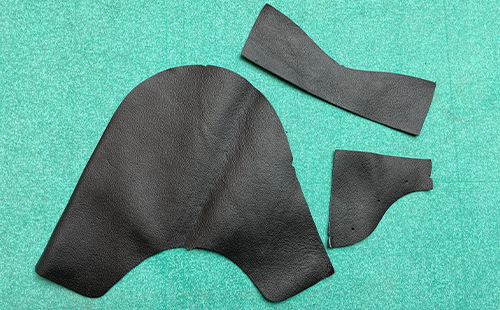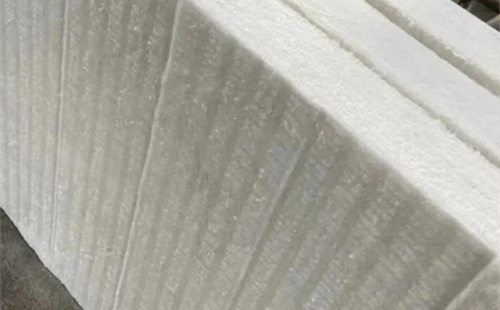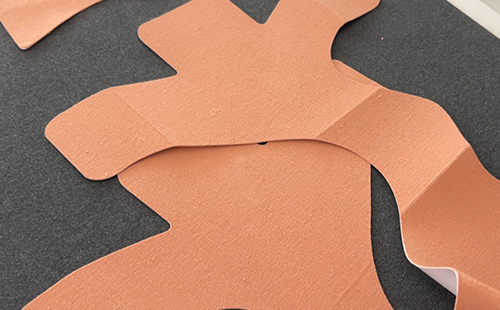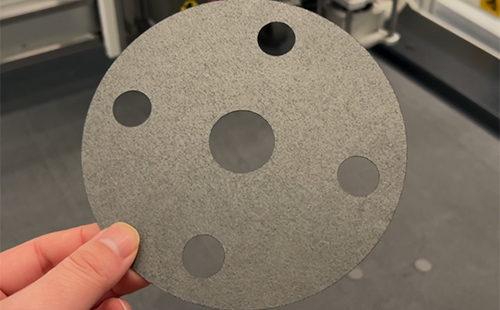
Carbon paper is an indispensable gas diffusion layer (GDL) material in the manufacturing of hydrogen fuel cells, supercapacitors, and high-precision electronic components. The cutting accuracy and processing quality of carbon paper directly determine the electrical conductivity, air permeability, and overall service performance of new energy devices, as well as the finished product yield. However, carbon paper features ultra-thin texture, special porous fiber structure, and high sensitivity to heat and external pressure. Most new energy manufacturing enterprises face common processing bottlenecks with traditional cutting techniques, including edge burrs, fiber tearing, powder shedding, pore collapse, and low material utilization rate.
With years of professional experience in CNC digital cutting equipment manufacturing for new energy composite materials, we have verified that oscillating vibration knife cutting machines have become the mainstream optimal solution for high-standard carbon paper processing. This article comprehensively elaborates on the drawbacks of traditional carbon paper cutting methods and the core advantages of CNC vibration knife cold cutting technology, helping enterprises achieve cost reduction, efficiency improvement, and quality upgrading in carbon paper production.
Pain Points of Traditional Carbon Paper Cutting Processes
Traditional processing methods including die stamping cutting, laser cutting, and manual cutting can hardly meet the strict production standards of hydrogen fuel cell carbon paper, with obvious limitations in precision, quality, cost, and flexibility:
1. Die Stamping Cutting: High Cost & Long Lead Time
Fuel cell carbon paper features diverse specifications and customized contour requirements. Traditional die cutting requires customized mold opening for each size and shape adjustment or new product development. The high mold manufacturing cost and long production cycle make it incompatible with small-batch, multi-variety flexible production modes. It also fails to support rapid prototype verification and iterative upgrading of new energy products, resulting in high idle costs and low production flexibility.
2. Laser Cutting: Thermal Damage & Performance Degradation
As a carbon-based porous functional material, carbon paper is extremely sensitive to high temperature. Laser cutting relies on thermal ablation processing, which inevitably causes edge carbonization, yellowing, and burning marks. The high temperature will block the microscopic pore structure of carbon paper, damage the internal fiber framework, and seriously weaken the gas diffusion and conductive performance of the GDL material. In addition, laser processing produces harmful smoke and peculiar smell, failing to meet the dust-free and clean production requirements of new energy workshops.
3. Manual Cutting: Low Efficiency & Poor Consistency
Manual blade cutting relies on worker experience, featuring slow cutting speed, low production efficiency, and large dimensional errors. The cut edges are rough with frequent burrs, fiber tearing, and floating powder. The unstable processing quality leads to poor consistency of finished carbon paper parts, high product scrap rate, and serious waste of high-cost carbon paper raw materials, unable to adapt to industrial mass production standards.
Oscillating Vibration Knife Cutter: Professional Cold Precision Cutting Solution for Carbon Paper
Aiming at the ultra-thin, brittle, porous, and heat-sensitive characteristics of fuel cell carbon paper, CNC digital flatbed cutting machines adopt customized optimized vibration parameters, adjustable vacuum adsorption system, and high-precision CNC control technology. The pure physical cold cutting process perfectly adapts to the processing of various thicknesses and coated carbon paper, thoroughly solving all pain points of traditional processing.
1. Full-Room Temperature Physical Cold Cutting, Zero Thermal Damage
The equipment completes material cutting through high-frequency micro-amplitude blade vibration without any thermal radiation or temperature rise during the whole process. It fundamentally avoids high-temperature melting, carbonization, and pore blockage problems existing in laser cutting. The original porous fiber framework and pore connectivity of carbon paper are completely retained, ensuring that the conductive, breathable, and mass transfer properties of the GDL material are not damaged. The processing process produces no smoke, burning residue, or harmful gas, fully complying with the clean production standards of new energy and electrochemical workshops.
2. Micro-Vibration Flexible Shearing, Burr-Free & Powder-Free Cutting
Adopting high-frequency vertical micro-vibration shearing mode, the cutting process features ultra-low lateral impact force and precisely controllable blade pressure. It will not brutally tear carbon fibers or squeeze and collapse microscopic pores. The finished cutting edge is flat, compact, free of burrs, missing corners, and floating powder. No secondary manual trimming is required, effectively eliminating the hidden danger of stack performance failure caused by carbon powder residue, and directly improving product qualification rate and post-process assembly efficiency.
3. High-Precision CNC Cutting, Stable Dimensional Consistency
Equipped with industrial-grade servo CNC control system, the cutting precision is stably controlled within ±0.1mm. Matched with the zoned adjustable vacuum adsorption table, it fixes ultra-thin carbon paper with soft and uniform suction. The material will not shift, stretch or arch during cutting. Even for micron-level ultra-thin carbon paper, flat and precise cutting can be realized. The size and contour of mass-produced carbon paper electrodes are highly unified, ensuring accurate assembly alignment and consistent performance of fuel cell stacks.
4. Mold-Free Special-Shaped Cutting, Flexible for R&D and Mass Production
The machine supports mainstream design formats such as DXF, CAD, and PLT. It generates cutting paths with one click after importing electronic drawings, realizing one-time precise forming of standard square electrodes, special-shaped contours, customized sizes, and hollow structures. No die molds are required throughout the process. It supports same-day sampling for R&D prototypes and flexible switching of small-batch trial production and large-scale mass production. The production mode perfectly matches the full-cycle production needs of new energy enterprises from product verification to batch delivery.
5. Intelligent Nesting Optimization, Greatly Reducing Raw Material Loss
Built-in professional intelligent nesting software automatically identifies the shape of cut pieces and optimizes the layout path, supporting edge-sharing cutting and compact material arrangement. Compared with manual layout, the material utilization rate is increased by more than 10%. As high-value new energy raw materials, carbon paper can bring considerable cost savings and profit improvement for enterprises through long-term high-precision material saving processing.
6. Fixed-Point Dust Collection System, Adapt to Clean Workshop Standards
Equipped with a professional blade fixed-point dust collection device, it instantly collects a tiny amount of carbon powder generated during cutting, effectively preventing carbon powder diffusion and secondary pollution of materials and workshops. No additional large-scale purification equipment is needed, easily meeting the high-cleanliness production requirements of hydrogen energy, electrochemistry, and semiconductor industries.
Customized Advantages of Professional Carbon Paper Cutting Equipment
Different from general-purpose cutting equipment, our CNC oscillating knife cutting machine is specially optimized for new energy carbon-based material processing scenarios, with exclusive customized functions for carbon paper processing:
1. Ultra-Thin Material Adaptive Cutting Optimization
Optimize the matching logic of vacuum adsorption gear and blade vibration parameters for micron-level ultra-thin carbon paper. The soft suction design avoids pore collapse, and the high-speed stable tool path prevents material stretching and deformation. Mature processing parameters are preset for composite carbon paper with hydrophobic coatings and microporous layers, realizing rapid debugging and stable production of new materials.
2. Customized Clean Cutting Solution
According to the cleanliness level of customer workshops, it supports customized closed cutting cavity and high-efficiency filter dust collection schemes, precisely controlling carbon powder diffusion, and meeting the ultra-clean production standards of fuel cell and high-end electrochemical component manufacturing.
3. Exclusive Process Support for New Energy Industry
We are familiar with the processing requirements of fuel cell GDL, electrolytic water electrodes, flow battery carbon paper and other products. We can optimize the cutting process according to customers’ subsequent assembly and performance testing standards, and provide small-batch R&D sample services to accelerate product verification and iteration.
4. Full-Cycle After-Sales Guarantee
Provide free sample cutting testing for customers to verify cutting effect, pore integrity and dimensional accuracy on site. Support door-to-door equipment installation, commissioning and one-on-one operator training. Free long-term software upgrades and rapid technical response services ensure stable and efficient operation of the production line.
Conclusion
The core difficulties of carbon paper processing lie in protecting the integrity of porous structure, controlling powder pollution, and ensuring high dimensional consistency. Traditional manual cutting, laser cutting and die cutting processes cannot balance processing quality, production cost and production flexibility, and are gradually phased out in high-end new energy manufacturing.
As an advanced cold cutting technology, CNC oscillating vibration knife cutting realizes heat-free, burr-free, powder-free, and mold-free flexible processing. It completely retains the functional properties of carbon paper materials, and is compatible with the whole production cycle of R&D sampling, small-batch customization and large-scale mass production. It has become the preferred automatic blanking solution for carbon paper electrodes in hydrogen fuel cells, electrolytic water, energy storage and other new energy fields.
If you have customized processing demands for carbon paper and various carbon-based electrode materials, welcome to contact us for sample testing and exclusive customized cutting solution and equipment quotation.