PTFE (Polytetrafluoroethylene), universally known as the "King of Plastics", features extreme performance including strong acid and alkali corrosion resistance, high and low temperature resistance, electrical insulation and self-lubricating non-stick properties. As a core engineering material for harsh working conditions, it is widely used to manufacture sealing parts, insulating components and anti-corrosion liners in chemical, pharmaceutical, food processing, electronic insulation and semiconductor industries.
Nevertheless, PTFE has inherent processing defects that puzzle most manufacturers. It presents obvious cold flow characteristics, which cause extrusion deformation and elastic rebound, making dimensional precision hard to control. More critically, PTFE decomposes and releases highly toxic fluoride gas under high-temperature conditions, bringing huge hidden dangers to occupational health and environmental compliance. Traditional processing technologies can hardly balance product quality, production efficiency and operational safety, resulting in deformed finished products, degraded sealing performance or severe safety risks. Adopting pure physical room-temperature shearing technology, the CNC oscillating vibration knife cold cutting machine fundamentally solves the deformation and toxic hazards of PTFE processing, serving as a safe and efficient automated cutting solution for industrial PTFE sealing and insulating parts.
Core Pain Points of Traditional PTFE Sheet Cutting Processes
The unique cold flow and high-temperature decomposition properties of PTFE put forward extremely strict requirements on the temperature and force control of cutting processes. All conventional processing methods have prominent defects in safety and product quality:
1. Manual Cutting: Low Efficiency, Severe Deformation & Poor Precision
Manual cutting relies on manual scribing with hooks knives and utility knives. PTFE has dense texture and strong toughness, making manual cutting laborious and time-consuming with extremely low single-shift output and high labor costs. Uneven manual cutting force causes cold flow deformation of PTFE materials. After rebound, the finished parts have large dimensional errors, and custom-shaped gaskets fail to reach standard contours. Poor fitting accuracy after assembly easily leads to medium leakage and high rework rates. In addition, manual layout depends entirely on worker experience, resulting in insufficient utilization of sheet edge gaps. The waste of high-priced PTFE raw materials causes substantial cost losses for manufacturers.
2. Laser Cutting: High Toxic Fume Risks & Damaged Material Performance
Laser cutting is a typical high-temperature thermal processing method. PTFE decomposes rapidly above 400°C and releases highly toxic fluoride gas, which damages operators’ respiratory systems and corrodes optical components of equipment. It also triggers serious environmental protection and occupational health compliance risks, so laser processing for PTFE has been explicitly prohibited in most standardized workshops. Meanwhile, high temperature causes carbonization, yellowing and melting deformation on cutting edges, completely destroying the original corrosion resistance and sealing performance of PTFE materials. For high-end sealing parts used in chemical and semiconductor industries, laser cutting cannot meet quality standards. Thick PTFE sheets also suffer from incomplete cutting and rough sections, leading to extremely low product yield.
3. Die Stamping Cutting: Extrusion Deformation & Poor Flexibility
Die stamping separates materials through high-pressure punching. The strong extrusion force intensifies the cold flow effect of PTFE, causing irreversible extrusion deformation and rebound. Finished gaskets have dimensional deviations and obvious edge indentations, which damage the flatness of sealing surfaces. Poor fitting performance after assembly often results in sealing failure. Moreover, custom molds are required for each special-shaped sealing and insulating part, with long mold opening cycles and high costs. For multi-specification and small-batch customized maintenance orders, the apportioned production cost is too high, making it impossible to undertake high-value customized orders.
Core Advantages of Vibration Knife Cutting Machine for PTFE Processing
Targeting the cold flow deformation and high-temperature toxic decomposition characteristics of PTFE materials, our vibration knife cutting machine is specially optimized in cutting mode, force control and tool path logic, realizing stable processing of PTFE films and PTFE sheets of different thicknesses.
1. Room-Temperature Physical Cold Cutting, Zero Toxic Fume, Complete Material Performance Retention
The equipment completes cutting through high-frequency micro-amplitude blade vibration with full physical room-temperature processing. The cutting area maintains constant room temperature all the time, completely eliminating high-temperature decomposition and toxic fluoride gas generation. There is no need for expensive special waste gas treatment equipment, greatly improving occupational health and environmental compliance. Without any thermal damage, PTFE’s original performance of acid and alkali resistance, high and low temperature resistance, insulation and sealing is fully retained. Finished products can be directly applied to strict working scenarios in chemical, pharmaceutical and semiconductor industries.
2. High-Frequency Flexible Shearing, Eliminate Cold Flow Deformation, Vertical & Smooth Cuts
Adopting high-frequency vertical shearing mode, the high-speed reciprocating vibration of the blade greatly reduces cutting resistance and avoids continuous extrusion-induced cold flow deformation. Finished PTFE parts have stable dimensions without rebound deviation. The cutting edge is vertical, smooth, burr-free and corner-intact with high flatness of sealing surfaces. Tight fitting after assembly gives full play to PTFE’s sealing and anti-corrosion performance. No secondary manual polishing and trimming is required, enabling direct use in subsequent processes and synchronously improving product quality and processing efficiency.
3. High-Precision CNC Tool Path, Consistent Batch Processing Quality
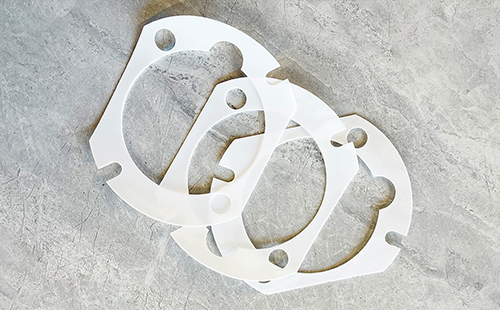
Equipped with an industrial servo CNC system, the cutting precision is stably controlled within ±0.1mm. Cooperated with a high-power vacuum adsorption table, the equipment firmly fixes PTFE sheets to prevent sliding and offset during cutting. Whether for standard circular flange gaskets, special-shaped sealing parts or insulating components, it can accurately restore drawing dimensions with highly consistent batch finished products. It fully meets high-precision sealing assembly requirements and effectively reduces rework and scrap rates.
4. Mold-Free Special-Shaped Cutting, Flexible for All Order Sizes
Compatible with mainstream drawing formats such as DXF, CAD and PLT, the machine generates cutting paths with one click after importing electronic drawings. It realizes one-time precise forming of standard gaskets, non-standard special-shaped parts and perforated components without any mold opening. Customized maintenance orders and small-batch products can be sampled on the same day. Product style adjustment only requires modifying electronic drawings, and production can be switched within minutes, perfectly adapting to the multi-specification and small-batch customized production demands of industrial sealing accessories.
5. Intelligent Nesting & Common-Edge Cutting, Reduce High-End Raw Material Loss
Built-in professional intelligent nesting system automatically identifies the shape of cut pieces and optimizes the layout path, supporting common-edge cutting and annular nested material arrangement to fully utilize sheet edge gaps. Compared with manual layout, the material utilization rate is increased by more than 10%. As a high-cost premium engineering material, PTFE can bring substantial cost savings and improved net profit for mass production with the help of intelligent material saving processing.
6. Automatic Feeding & Labor Saving, Improve Mass Production Efficiency
Support automatic feeding for whole sheets and coiled materials, with one-click production startup after automatic nesting. A single device can replace the production capacity of 4-6 skilled cutting workers. It not only greatly reduces labor costs, but also shortens operators’ direct contact time with PTFE materials, lowering occupational health risks and being more suitable for standardized large-scale industrial workshops.
Customized Advantages of Professional PTFE Cutting Equipment
With in-depth experience in industrial sealing and engineering plastic cutting, our equipment is specially optimized for PTFE material characteristics and industry application scenarios, different from universal cutting machines:
1. Exclusive Optimized Cutting Scheme for PTFE
Combined with the cold flow characteristics of PTFE, we optimize the matching logic of blade vibration frequency, feeding speed and cutting force. Mature processing parameters are preset for ultra-thin PTFE films and medium-thick industrial PTFE sheets, ensuring vertical and smooth cutting edges with minimal dimensional rebound. No repeated debugging is required for new material trial production.
2. Full-Thickness Specification Adaptation
Equipped with adjustable-stroke blade and precision force control system, the equipment covers the full-thickness processing range from ultra-thin PTFE films to thick industrial PTFE plates. It ensures no deformation for thin materials and one-time complete cutting for thick plates, meeting all mainstream PTFE product processing demands with one device.
3. Specialized Nesting Optimization for Sealing Industry
Optimize common-edge cutting and annular nesting algorithms for mainstream products such as flange gaskets, sealing rings and anti-corrosion liners to maximize sheet utilization. It supports rapid batch order import and production scheduling, saving manual layout time and improving overall production line efficiency.
4. Full-Cycle After-Sales Guarantee
Provide free sample cutting testing for customers to verify cutting effect and section precision before cooperation. We offer door-to-door equipment installation, commissioning and one-on-one operator training. Rapid response for daily technical problems, spare parts supply from local warehouses and free long-term software upgrades ensure long-term stable operation of production lines.
Conclusion
The core difficulties of PTFE processing lie in controlling cold flow deformation for quality assurance and avoiding high-temperature toxic hazards for safety production. Traditional manual, laser and die stamping processes cannot balance quality, safety, efficiency and cost, either causing poor precision and degraded sealing performance or triggering severe safety and environmental risks.
Adopting pure physical room-temperature cutting technology, the CNC vibration knife cold cutting machine realizes deformation-free, high-precision and mold-free flexible cutting while completely eliminating toxic fume risks. It improves production efficiency, reduces high-end raw material loss, and ensures production compliance and finished product performance. It is the preferred automated blanking solution for PTFE sealing and insulating accessories in chemical, electronic, pharmaceutical and new energy industries.
If you have cutting demands for PTFE sheets, films and sealing gaskets, welcome to contact us for sample testing and customized cutting solutions and equipment quotations.