Every footwear manufacturer faces persistent production bottlenecks caused by outdated cutting processes. Manual cutting and traditional die stamping have long been the mainstream processing methods for shoe factories, yet they cannot match the fast-changing market demands for mass production, small-batch customization and cost control. This article makes a full comparison between conventional cutting modes and CNC vibrating knife cutting machines, covering core industry pain points, practical cutting advantages, applicable material categories and corresponding physical material characteristics.
Core Pain Points of Traditional Shoe Material Cutting
First, labor cost waste is extremely serious. Manual cutting requires multiple skilled workers to stack and trim shoe materials piece by piece. The whole workflow relies heavily on manpower, and labor expenses keep rising year by year. Second, production speed is limited. Hand trimming can only handle single or thin layers of materials, and the daily output is fixed at a low level. When facing bulk orders, factories cannot shorten delivery cycles and easily lose cooperative clients.
Third, die cutting brings extra mold investment. Each new shoe style needs customized steel dies, which cost hundreds to thousands of dollars per set. Mold production takes 3 to 7 working days, slowing down sample development and new product iteration. Fourth, material utilization rate is low. Manual layout depends on workers’ experience, leaving large blank waste on leather, foam and fabric rolls, which raises raw material expenditure.
Fifth, cutting consistency cannot be guaranteed. Hand-cut pieces have uneven edges and size deviations, while worn dies will produce irregular outlines after repeated use. Defective cuttings increase rework pressure and reduce finished product qualification rates. In addition, traditional hydraulic die stamping generates loud noise, and laser cutting creates toxic smoke and burnt material edges, failing to meet modern environmental production standards.
Traditional Cutting VS Vibrating Knife Cutting: Core Advantages
- Strong multi-layer cutting capacity for explosive efficiencyThe CNC vibrating knife cutter supports synchronous cutting of multiple stacked shoe materials at one time. Its high-frequency oscillating blade realizes continuous cold cutting without heating. Under the same working hours, the output can be doubled or tripled compared with manual work. Factories can finish large order batches in shorter time and greatly improve delivery efficiency.
- Dieless digital cutting cuts extra expenditureNo steel cutting molds are required. Operators only import shoe pattern drawings into the supporting cutting software, and the machine will automatically complete cutting tasks. New style switching takes less than one minute, eliminating mold manufacturing fees and waiting cycles. Small-batch trial production and personalized customization become affordable for small and medium shoe factories.
- Intelligent nesting improves raw material utilizationBuilt-in automatic layout software optimizes the arrangement of cutting patterns on raw material rolls, minimizing blank waste. The material utilization rate rises by 10% to 18% compared with manual layout, directly cutting down long-term raw material costs for mass production.
- Ultra-high cutting precision with uniform finished piecesEquipped with precision servo drive systems, the cutting accuracy reaches ±0.1mm. All cut shoe parts maintain unified size and smooth burr-free edges without secondary trimming. Complex curved patterns, hollow decorative shapes and irregular shoe upper outlines can all be processed perfectly, lifting product appearance grade.
- Labor and operation cost reductionOne vibrating knife cutting machine can replace 4 to 6 skilled cutting workers. Enterprises cut recurring labor salaries, and one ordinary operator can complete feeding, parameter adjustment and equipment supervision simultaneously. The machine runs stably for long hours with low daily maintenance costs.
- Eco-friendly cold cutting with no secondary pollutionDifferent from laser thermal cutting, the vibrating knife adopts pure physical vibration cutting, producing no smoke, burnt marks or harmful gas. The cutting process runs with low noise, complying with global factory environmental inspection standards, and avoids damage to heat-sensitive shoe materials.
Full List of Applicable Cutting Materials for Shoe Production
The vibrating knife cutting machine adapts to nearly all flexible and semi-rigid shoe-making raw materials, covering uppers, midsoles, insoles, linings and decorative accessories. The complete material range includes genuine leather, regenerated leather, microfiber synthetic leather, PU and PVC artificial leather, fly-knit mesh fabric, breathable textile lining cloth, EVA foaming sheet, rubber sole material, memory foam padding, hot melt adhesive film, composite multi-layer shoe materials, non-woven fabric and canvas.
Physical Characteristics of Main Shoe Materials & Matching Cutting Performance
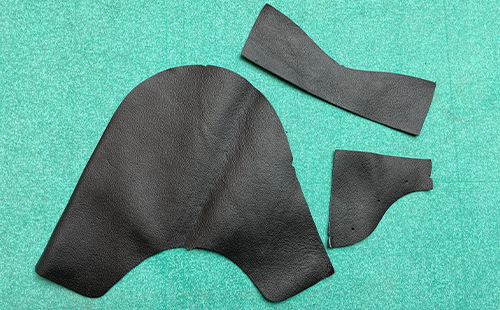
- Leather materials (genuine leather, microfiber, PU leather)Physical features: moderate hardness, elastic surface, easy to crack or deform under high temperature, thin thickness with soft texture.Cutting matching: low-frequency vibration blade avoids stretching leather surfaces; cold cutting prevents surface melting and discoloration, edges stay neat without peeling.
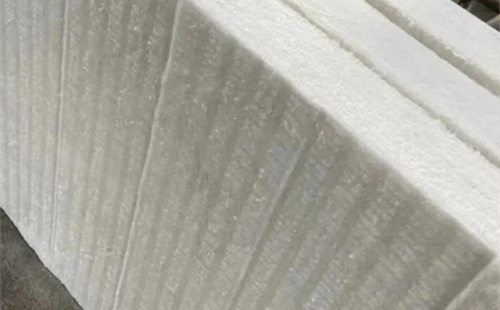
- Foam materials (EVA, memory foam, rubber foam)Physical features: porous internal structure, soft and compressible, thick texture, prone to collapse during extrusion cutting.Cutting matching: adjustable blade vibration force balances compression; multi-layer stacking cutting keeps uniform thickness for each cut piece, no concave deformation on foam sections.
- Textile fabrics (flyknit, canvas, lining cloth)Physical features: woven fiber structure, easy fraying when cut by high heat, thin and flexible.Cutting matching: physical vibration separates fibers cleanly without melting fiber ends, no loose threads on cutting edges, no need for edge sealing treatment.
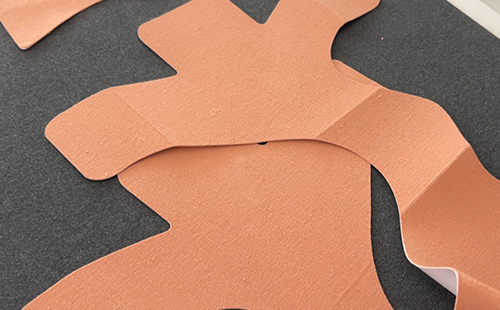
- Multi-layer composite shoe materialsPhysical features: stacked layers of leather, foam and adhesive film, inconsistent hardness between layers, easy layer separation under uneven cutting force.Cutting matching: controllable cutting depth and vibration frequency lock all composite layers tightly during cutting, no delamination or dislocation of different material layers.
In summary, the vibrating knife cutting machine solves all major pain points of traditional shoe material cutting from efficiency, cost, precision and environmental protection dimensions. For shoe factories pursuing long-term stable profit growth and flexible production transformation, digital vibrating knife cutting equipment is an irreplaceable production upgrade solution.